AI Use Cases in CPG become valuable when they improve the decisions hidden behind a familiar package on a retail shelf. A branded food, beverage, household, or personal-care product may look simple to the shopper, yet its availability depends on hundreds of linked choices: which consumer need to pursue, what formulation and pack to commercialize, how much baseline demand to expect, which promotion to fund, where to deploy inventory, and how to respond when supply changes. The practical story of AI in this sector is therefore not a collection of isolated algorithms. It is a decision chain that runs from consumer signal to portfolio choice, SKU forecast, production schedule, customer order, shelf condition, and learning loop.
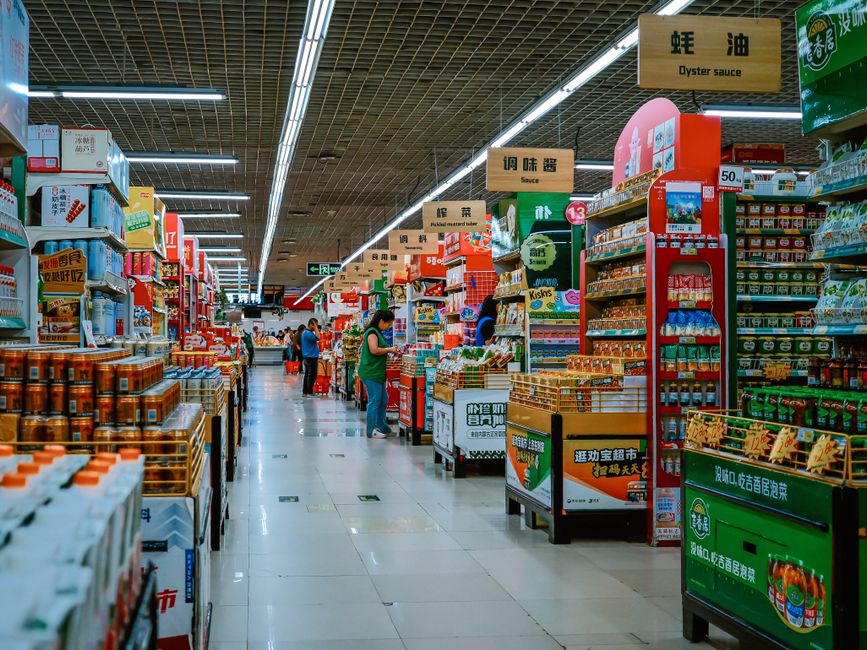
The most useful way to examine AI Use Cases in CPG is to follow that chain behind the scenes. In a large FMCG organization, consumer insights, brand teams, category managers, demand planners, RGM analysts, customer teams, manufacturing sites, and logistics planners rarely work from one perfectly synchronized picture. AI can connect their decisions, but only when outputs fit the actual cadence of stage gates, demand reviews, S&OP meetings, trade promotion cycles, production planning, and retail execution.
How AI Use Cases in CPG Begin with Consumer and Portfolio Signals
The decision chain often starts before a formal product concept exists. Consumer insights teams monitor search behavior, social conversations, complaint themes, syndicated category data, household panels, sensory results, and retailer feedback. Conventional research remains essential because it explains motivations and validates preferences, but AI can scan a broader signal set and identify weak patterns earlier. A beverage company, for example, may detect rising interest in a functional ingredient while also seeing complaints about sweetness, pack size, or price. The machine does not decide the innovation strategy; it gives category and brand teams a more current evidence base.
Natural-language models can cluster unstructured comments by need state, usage occasion, product attribute, or dissatisfaction driver. Analysts can then compare those clusters with category growth, household penetration, competitive launches, and the existing portfolio. This helps distinguish a durable consumer tension from a transient online topic. It also exposes whether the opportunity requires a new brand proposition, a formulation renovation, a different pack-price point, or stronger retail execution on an existing SKU.
Portfolio teams can use scenario models to estimate cannibalization, incrementality, margin, manufacturing complexity, and retailer relevance before committing scarce development capacity. That matters because SKU proliferation is rarely caused by one visibly poor decision. It accumulates through line extensions that each appear reasonable in isolation but dilute velocity, increase changeovers, complicate forecasting, and consume working capital. AI Use Cases in CPG should make those trade-offs visible early enough for governance teams to stop, reshape, or prioritize concepts.
Inside the Stage-Gate Path from Concept to Commercialization
Once a concept enters stage-gate development, AI can shorten the administrative and analytical work surrounding formulation, packaging, claims, and commercialization. A typical project must coordinate consumer acceptance, ingredient constraints, nutritional targets, allergen controls, cost objectives, packaging compatibility, regulatory language, supplier readiness, line trials, and customer timing. Delays frequently arise not from a single technical obstacle but from dependencies that become visible too late.
Models trained on approved internal records can retrieve comparable formulations, prior stability findings, packaging specifications, sensory results, and lessons from previous launches. Formulators can explore candidate ingredient combinations within defined technical and regulatory boundaries. Packaging engineers can compare materials, dimensions, pallet efficiency, line capability, and damage history. Claims and label teams can identify missing substantiation or inconsistent statements before artwork reaches a late approval round. Human specialists remain accountable for safety, compliance, and technical release; AI accelerates evidence assembly and exception detection.
Commercialization teams can also model launch readiness across the full critical path. Instead of reporting that a project is broadly on track, the system can surface that a specific resin allocation, co-manufacturer audit, artwork approval, or retailer reset date threatens the launch. It can summarize the consequence in business terms: lost distribution window, reduced first-quarter case fill rate, expedited freight, or excess inventory in an outgoing package. These are practical AI Use Cases in CPG because they turn fragmented project data into an actionable launch decision.
AI Use Cases in CPG within Forecasting, S&OP, and IBP
After commercialization assumptions enter the demand plan, the focus shifts from opportunity sizing to SKU-level forecasting. CPG Demand Forecasting AI can combine shipment history, point-of-sale movement, distribution changes, price, promotions, holidays, weather, local events, assortment resets, and out-of-stock indicators. The objective is not simply a lower aggregate error. Planners need a forecast that behaves credibly at the level where materials are purchased, lines are scheduled, and inventory is deployed.
The model usually produces a statistical baseline, while demand planners reconcile known events and commercial intelligence. A launch may have no history; a delisting can make old history irrelevant; a promotion may shift timing rather than create true consumption. AI helps estimate these effects and flag abnormal overrides, but consensus forecasting still requires customer teams, category teams, and supply planners to challenge assumptions. Forecast bias is especially important: a consistently optimistic plan can hide slow-moving inventory until write-offs become unavoidable, while pessimism can depress service and on-shelf availability.
During S&OP and executive IBP, the forecast becomes one input to a cross-functional choice. Supply teams test it against capacity, labor, raw-material availability, co-manufacturer limits, and deployment constraints. Finance compares the volume outlook with revenue, gross margin, and working-capital commitments. Generative AI for IBP can prepare exception summaries, trace changes between planning cycles, and explain which assumptions drive a gap, but it should not manufacture false consensus. Executives still need explicit alternatives, financial consequences, and named decision owners.
When commodity prices rise or packaging supply is disrupted, connected models can recalculate feasible production and allocation options quickly. They may recommend protecting a strategic pack, shifting volume to another line, qualifying an alternate component, or temporarily reducing a low-velocity SKU. To move from recommendations to controlled action, some manufacturers engage an enterprise AI agent developer to design agents that retrieve planning data, apply authorization rules, document assumptions, and route exceptions to the responsible planner.
From Price-Pack Architecture to Promotion Evaluation
Commercial planning adds another layer because revenue is shaped by list price, pack size, assortment, distribution, trade terms, and promotional execution. AI-Powered Revenue Growth Management can estimate consumer price response, competitive gaps, retailer economics, channel differences, and likely switching among packs. This supports price-pack architecture decisions that give shoppers meaningful entry, mainstream, and premium options without creating redundant SKUs.
Trade promotion management begins with a baseline sales estimate. Planners then assess expected promotion lift, display support, feature activity, retailer participation, inventory availability, and trade spend. Weak baselines cause misleading post-event conclusions: ordinary demand may be credited to the promotion, while pantry loading and post-event dips obscure true incrementality. Machine-learning models can produce more granular baselines and comparable-event benchmarks, allowing customer teams to challenge promotional tactics before funding is committed.
After execution, TPO analysis should separate shipment timing from consumer movement and account for out-of-stocks, display compliance, competitor actions, and cannibalization. A promotion that generates high cases but weak margin may still be useful for trial or retailer strategy, yet that purpose should be explicit. AI Use Cases in CPG make post-event evaluation more disciplined by connecting planned mechanics, actual retail conditions, POS outcomes, supply costs, and the financial settlement of trade claims.
Closing the Loop through Supply, Shelf, and Quality
The physical network must convert the demand and commercial plan into available product. Supply planners sequence production around line rates, sanitation requirements, allergen changeovers, shelf life, material constraints, and deployment needs. AI can predict schedule risk, recommend changeover-efficient sequences, and detect when a local optimization will hurt customer service elsewhere. For example, a longer run may improve plant efficiency but create excess inventory while another distribution center misses orders on a higher-priority SKU.
Allocation models become critical when supply is constrained. Rather than applying simple proportional cuts, they can consider customer commitments, store-level demand, remaining inventory, lead times, substitution options, shelf-life risk, and strategic priorities. Guardrails are necessary because an allocation recommendation can affect retailer relationships and consumer access. The goal is a transparent decision that improves case fill rate without silently favoring one channel or allowing short-term shipments to override portfolio strategy.
Retail execution data then reveals whether the product actually reached the shelf. Computer vision can assess assortment, facings, price tags, displays, and planogram compliance from store images. Combined with POS and inventory signals, it can identify probable phantom inventory or persistent shelf gaps. Field teams receive prioritized actions rather than a long audit checklist. This is where Generative AI for CPG can translate several diagnostic signals into a concise store task while preserving the underlying evidence for review.
Consumer complaints and quality events complete the learning loop. Language models can classify complaints by product, lot, defect mode, severity, and potential safety relevance, then route urgent cases under established quality procedures. Pattern detection across complaints, production records, supplier lots, sensory findings, and distribution conditions may accelerate root-cause analysis. AI Use Cases in CPG are most mature when that learning feeds back into specifications, supplier quality, formulation, packaging, forecasting, and retail execution rather than ending in a standalone dashboard.
Conclusion
The behind-the-scenes value of AI lies in connecting decisions that CPG organizations already make: portfolio prioritization, stage-gate advancement, demand-plan reconciliation, executive IBP, promotion funding, production scheduling, allocation, perfect-store action, and quality response. Strong implementations begin with a decision owner, a measurable outcome, trusted data, and an escalation path; they then embed model outputs into the existing operating cadence. Organizations evaluating AI Use Cases in CPG can extend that foundation with Generative AI for CPG when teams need faster synthesis, scenario explanation, and governed assistance across workflows. The durable advantage is not automation for its own sake. It is a shorter, better-controlled path from consumer evidence to profitable growth and reliable shelf availability.
Comments
Post a Comment