Three years ago, our automotive assembly plant faced a critical crossroads. Rising labor costs, mounting pressure to reduce cycle times, and an increasingly complex multi-tier supply chain had pushed our OEE below industry benchmarks. Senior leadership greenlit a major transformation initiative, and I was tasked with leading the implementation across two production lines responsible for powertrain assembly. What followed was an intense journey through failed pilots, unexpected wins, and fundamental shifts in how we approached manufacturing operations—lessons that fundamentally changed my understanding of what it takes to successfully deploy advanced automation in a high-volume production environment.
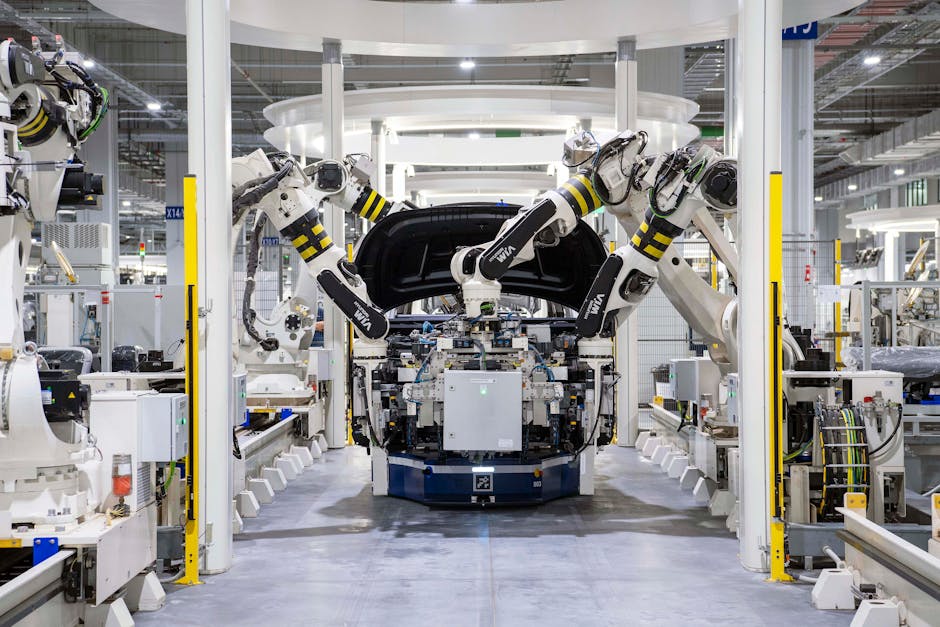
The initial mandate was straightforward: implement Intelligent Production Automation across our cylinder head machining and final assembly operations to improve throughput by 15% while reducing defect rates. We had budget, executive sponsorship, and aggressive timelines. What we didn't have—and what nearly derailed the entire initiative—was a realistic understanding of how deeply automation would challenge our existing processes, workforce dynamics, and quality management systems. The technology vendors promised seamless integration with our legacy ERP systems and immediate productivity gains. Reality proved far more nuanced.
Early Missteps: When Automation Collided with Reality
Our first major mistake was treating Intelligent Production Automation as a plug-and-play technology upgrade rather than a fundamental business transformation. We selected a robotics integration vendor based primarily on their impressive demo at an industry trade show—collaborative robots that could adapt to part variations, integrated vision systems for quality inspection, and predictive maintenance algorithms that promised to eliminate unplanned downtime. The technology looked flawless in the controlled demo environment. On our production floor, with real parts, legacy tooling, and the constant variability of high-mix manufacturing, things fell apart quickly.
Within the first month of pilot deployment, we encountered problems the vendor hadn't anticipated. Our torque-to-yield fastening operations required precise force feedback that the standard gripper configurations couldn't deliver reliably. Part tolerance variations from our Tier 2 suppliers—variations we'd historically managed through operator skill and judgment—confused the vision systems, triggering false rejects that shut down the line repeatedly. Our maintenance team, trained on traditional PLCs and pneumatic systems, struggled to troubleshoot the new AI-driven control algorithms. We were burning through our implementation budget on customization work that should have been identified during the assessment phase.
The Hidden Complexity of Legacy Integration
The technical integration challenges were compounded by our failure to properly map existing workflows before introducing automation. Our MRP system relied on manual data entry at multiple checkpoints—a workaround we'd implemented years ago to address limitations in our ERP software. The automation system assumed real-time data exchange, but our infrastructure wasn't architected to support it. Production scheduling broke down because the automated cells completed operations faster than our planning system could react, creating downstream bottlenecks we hadn't modeled. We learned the hard way that Smart Factory Integration isn't just about deploying new technology—it's about reimagining information flows, decision points, and organizational roles across the entire value stream.
The Turning Point: Aligning Automation with Lean Principles
The breakthrough came during a Kaizen event six months into the troubled implementation. Rather than continuing to force-fit automation into existing processes, we took a step back and applied fundamental lean manufacturing principles to the problem. We assembled a cross-functional team—production engineers, maintenance technicians, quality specialists, and critically, the operators who worked on the lines every day. Over three intensive days, we value-stream mapped the current state, identified waste in granular detail, and redesigned the workflow before configuring the automation to support it.
This approach revealed several key insights. First, we were automating operations that shouldn't exist at all—inspection steps that masked upstream quality problems, material handling moves that resulted from poor line layout, and rework loops that we'd normalized over years of operation. By eliminating these sources of waste first, we simplified what the automation system needed to accomplish. Second, we discovered that the highest-value applications for Intelligent Production Automation weren't the high-visibility robotic cells we'd prioritized initially—they were less glamorous applications like intelligent material sequencing, predictive quality analytics, and adaptive process control that addressed our most persistent pain points around variation and unplanned downtime.
Redesigning Around Human-Machine Collaboration
One of our most successful innovations emerged from this redesign process. Instead of replacing operators with fully automated cells, we implemented a collaborative model where intelligent automation systems handled repetitive, ergonomically challenging tasks while operators focused on problem-solving, quality verification, and process optimization. For example, our cylinder head assembly operation now uses vision-guided robotics for precise gasket placement and fastener installation—operations that previously caused repetitive strain injuries and had high error rates due to fatigue. But operators retain control over torque verification, final inspection, and immediate corrective action when the system detects anomalies. This hybrid approach delivered better quality outcomes than either full automation or manual operations alone, and it dramatically improved workforce buy-in for the transformation.
Real Wins: Measurable Improvements Across Key Metrics
Once we aligned the implementation with lean principles and redesigned for human-machine collaboration, results accelerated rapidly. Within 18 months of the revised approach, we achieved improvements that exceeded our original business case. OEE increased from 73% to 87% across the automated lines—driven primarily by a 40% reduction in unplanned downtime and a 25% improvement in quality rate. Our first-pass yield on cylinder heads improved from 94.2% to 98.7%, eliminating an entire rework station and the associated carrying costs for work-in-process inventory.
The predictive maintenance capabilities delivered unexpected value. By analyzing vibration patterns, temperature variations, and process parameter drift, the system identified deteriorating tooling and developing equipment issues days or weeks before they would cause line stoppages. Our maintenance team shifted from reactive firefighting to planned interventions during scheduled downtime windows. This reduced our MRO spending by 22% while simultaneously improving equipment availability. The data generated by Digital Manufacturing systems also enhanced our supplier quality management—we could now provide Tier 2 suppliers with detailed analytics on how part variations impacted downstream assembly, enabling collaborative problem-solving that improved incoming quality.
Unexpected Benefits: Faster NPI and Design Feedback
An unanticipated benefit emerged during our next new product introduction cycle. The data infrastructure and simulation capabilities we'd built for Intelligent Production Automation enabled far more effective collaboration between product engineering and manufacturing engineering during the design validation phase. We could simulate assembly sequences, identify potential quality risks, and optimize tooling strategies in the virtual environment before cutting metal for prototype tooling. This compressed our NPI timeline by six weeks and eliminated two costly design iterations that would have been required under our previous approach. The connection between intelligent automation and product lifecycle management became a strategic advantage we hadn't initially considered.
Managing the Human Dimension: Upskilling and Culture Change
Technology implementation was only half the battle. The cultural and organizational changes required to sustain Intelligent Production Automation proved equally challenging and equally critical. We faced significant anxiety among the hourly workforce about job security and skill obsolescence. Some of our most experienced operators—people with decades of tribal knowledge about process nuances—felt threatened by systems that seemed to make their expertise irrelevant. Addressing these concerns required transparent communication, meaningful involvement in the transformation process, and substantial investment in training and development.
We created a structured upskilling program in partnership with our local community college, offering certification pathways in industrial automation, data analytics, and advanced manufacturing technology. Critically, we prioritized existing employees for these programs and made completion a prerequisite for promotion into higher-paying technical roles. We also redesigned job classifications to create new positions like "automation technician" and "process data analyst"—roles that combined traditional manufacturing knowledge with new technical capabilities. This sent a clear message that automation was expanding opportunities rather than eliminating them, and it gave our workforce a concrete path forward.
The culture change extended to management and engineering as well. We had to break down silos between IT, engineering, and operations that had operated independently for years. Lean Manufacturing AI required collaboration patterns and decision-making processes that didn't align with our traditional functional hierarchies. We implemented daily tier meetings where cross-functional teams reviewed automation system performance, addressed emerging issues, and made rapid decisions on process adjustments. This required senior leaders to delegate more authority to the floor level and trust teams to solve problems without escalation—a significant shift for an organization with a historically top-down management culture.
Looking Forward: Scaling and Continuous Improvement
With two production lines successfully transformed, we're now scaling the approach across the entire facility and sharing lessons learned with sister plants in our global network. The key lesson from our journey is that successful Intelligent Production Automation requires equal attention to technology, process, and people. The most sophisticated algorithms and robotics systems will fail without a foundation of operational excellence, robust data infrastructure, and an engaged workforce that understands how to leverage these capabilities effectively.
We've also learned to approach implementation more incrementally. Rather than big-bang transformations, we now use a crawl-walk-run methodology—starting with focused pilots that demonstrate value, building organizational capability gradually, and scaling only after we've proven both technical performance and user adoption. This reduces risk, maintains production stability, and generates momentum through visible early wins. We're also investing more heavily in change management and training upfront, recognizing that these elements are critical path items rather than afterthoughts.
Conclusion
The transformation journey that began three years ago fundamentally changed our manufacturing operations and our competitive position. We've reduced production costs by 18%, improved quality to best-in-class levels, and created a more agile, data-driven organization capable of responding rapidly to market demands and engineering changes. But the real value extends beyond metrics—we've built organizational capabilities in automation, analytics, and continuous improvement that position us for ongoing innovation as technologies continue to evolve. For manufacturing leaders considering similar initiatives, my strongest advice is to approach Intelligent Production Automation as a strategic transformation rather than a technology deployment, invest heavily in your people alongside the technology, and maintain unwavering focus on operational fundamentals. As advanced tools like a Generative AI Platform continue to reshape manufacturing, the organizations that succeed will be those that integrate these capabilities thoughtfully into strong operational foundations while keeping their workforce engaged and empowered throughout the journey.
Comments
Post a Comment