Deploying intelligent production systems in manufacturing environments requires coordinated attention across technical infrastructure, organizational readiness, data management, and continuous improvement frameworks. Too many initiatives fail not because the technology underperforms, but because organizations skip critical preparatory steps or underestimate the complexity of transforming traditional manufacturing operations into adaptive, data-driven production environments. This comprehensive checklist distills lessons from successful implementations across industries, providing manufacturing teams with a structured approach to planning, deploying, and optimizing intelligent capabilities.
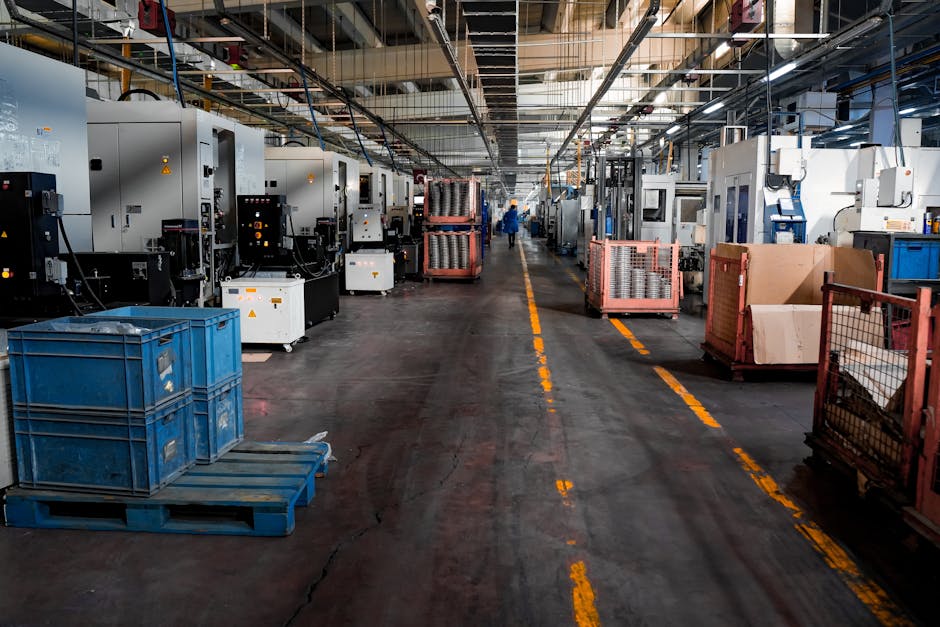
Whether you're implementing your first smart sensor network or upgrading existing automation to leverage machine learning and real-time analytics, Intelligent Production Lines require methodical planning and execution. This checklist organizes essential considerations into phases, from initial assessment through post-deployment optimization, with clear rationale for each item explaining why it matters and what happens when organizations skip it. Manufacturing operations leaders can use this framework to evaluate readiness, identify gaps, and sequence implementation activities for maximum impact and minimum disruption.
Phase One: Assessment and Foundation Building
Conduct Comprehensive Production Data Audit
Before implementing any intelligent production line capabilities, audit what data you currently collect, where it resides, how accurately it reflects actual operations, and who owns data quality. This assessment reveals whether your data foundation can support advanced analytics or requires remediation first.
Rationale: Intelligent systems depend entirely on data quality. Organizations that skip this step discover months into implementation that their sensor data contains systematic errors, their production records have inconsistent timestamps, or critical context about manufacturing processes exists only in operators' heads rather than in accessible systems. Companies like Rockwell Automation emphasize that successful smart factory integration starts with data infrastructure, not with deploying the most sophisticated algorithms available.
Map Current Production Workflows and Pain Points
Document end-to-end production processes from raw material receipt through finished goods shipment, identifying bottlenecks, quality issues, downtime patterns, and inefficiencies that intelligent production lines should address. Involve operators, maintenance technicians, quality inspectors, and production planners in this mapping exercise.
Rationale: Intelligent production lines should solve real business problems, not just digitize existing processes. Organizations that implement technology without clear problem definition often build sophisticated systems that don't address their most pressing operational challenges. Detailed process mapping also reveals integration requirements and helps prioritize which production areas offer the highest return on investment for initial intelligent capabilities deployment.
Evaluate Network Infrastructure and Edge Computing Capacity
Assess whether your plant network can handle the data volumes that IIoT sensors and real-time production monitoring generate, whether you have adequate edge computing resources to process data locally rather than overwhelming cloud connections, and whether network reliability meets the requirements for production-critical intelligent systems.
Rationale: Intelligent production lines generate massive data streams. A single modern CNC machine with comprehensive sensor instrumentation might produce gigabytes of data daily. Multiply that across dozens or hundreds of machines, and network infrastructure quickly becomes a constraint. Organizations that deploy sensors without upgrading network capacity experience latency issues that undermine real-time decision-making capabilities or system failures when network interruptions prevent critical data from reaching analytics platforms.
Establish Baseline Performance Metrics
Measure current state performance across key indicators—OEE, cycle times, defect rates, unplanned downtime, production throughput, resource utilization, and inventory turnover—using consistent methodologies that will allow before-and-after comparisons once intelligent capabilities are deployed.
Rationale: You cannot demonstrate value without rigorous baseline measurements. Many intelligent production line projects generate impressive percentage improvements that leadership questions because no one documented the starting point reliably. Baseline metrics also help calibrate expectations, identify which performance gaps matter most to the business, and provide objective criteria for evaluating whether pilot deployments justify broader rollout.
Phase Two: Design and Planning
Define Specific Use Cases with Clear Success Criteria
Select initial intelligent production line applications based on business impact, technical feasibility, and organizational readiness. For each use case, specify exactly what success looks like in measurable terms, what data the solution requires, and what process changes implementation will necessitate.
Rationale: Broad mandates like "implement smart factory integration" or "deploy predictive maintenance" fail because they lack specificity. Successful projects define narrow, achievable use cases such as "reduce unplanned downtime on Line 3 stamping presses by 25% within six months" or "decrease quality escapes in final assembly by implementing real-time defect detection." Clear use cases with measurable success criteria keep teams focused and provide unambiguous evidence when intelligent capabilities deliver value.
Select Technology Stack Based on Integration Requirements
Choose sensor platforms, edge computing hardware, manufacturing execution systems, analytics software, and visualization tools that integrate effectively with your existing enterprise systems and support the specific use cases you've prioritized, rather than selecting based solely on vendor reputation or feature lists.
Rationale: Technology selection drives implementation complexity and long-term operational costs. Organizations that choose platforms requiring extensive custom integration work often exceed budgets and timelines. Those that select systems incompatible with existing manufacturing execution systems or enterprise resource planning platforms end up with data silos that undermine the connected intelligence these implementations promise. Vendors like ABB and Fanuc offer integrated solutions, but success requires carefully matching capabilities to your specific environment rather than assuming one-size-fits-all approaches will work.
Design Data Architecture for Scalability
Plan how data will flow from sensors through edge processing to centralized analytics platforms and business systems, ensuring the architecture can scale from pilot deployments on single production lines to plant-wide or multi-site implementations without requiring fundamental redesign.
Rationale: Many intelligent production line projects start as pilots on individual machines or production lines. When pilots succeed, organizations want to scale quickly, but poorly designed data architectures create technical debt that requires expensive rework. Designing for scalability from the start—even if initial deployment is limited—prevents the painful situation where success paradoxically creates problems because the technical foundation cannot support expansion.
Develop Change Management and Training Strategy
Plan how you will prepare production teams for new ways of working, what training they need to collaborate effectively with intelligent systems, how you will address concerns about job security or loss of autonomy, and how you will build confidence that the new systems will help rather than hinder their work.
Rationale: Technical excellence means nothing if operators don't trust the system or managers override automated decisions because they don't understand the underlying logic. Organizations that treat intelligent production lines purely as technical projects consistently underperform compared to those that invest equally in helping people adapt to new capabilities. Change management should begin before technology deployment, not after problems emerge.
Phase Three: Implementation and Deployment
Start with Controlled Pilot in Non-Critical Production Area
Deploy initial intelligent production line capabilities in an environment where you can learn and iterate without risking core operations, selecting a production area with relatively clean data, engaged operators, and manageable complexity for the first implementation.
Rationale: Starting with your most problematic production line or most critical operation maximizes pressure but minimizes learning opportunities. Pilot deployments should balance learning and demonstrating value. A well-chosen pilot environment lets teams develop expertise, refine processes, and build confidence before tackling higher-stakes implementations. Success in pilots also creates internal champions who advocate for broader deployment when you expand scope.
Instrument Production Equipment with Appropriate Sensors
Install smart sensors that capture the specific data your use cases require—vibration and temperature for predictive maintenance, vision systems for quality control, position sensors for production tracking—ensuring consistent placement, proper calibration, and reliable connectivity to edge computing resources.
Rationale: Sensor selection and installation directly impacts data quality and system performance. Under-instrumented equipment provides insufficient data for accurate analysis. Over-instrumented equipment generates data volume that overwhelms processing capacity and obscures signal with noise. Inconsistent sensor placement across similar machines creates data standardization challenges that corrupt machine learning models. Proper instrumentation requires deep understanding of both the production equipment and the analytical requirements of your intelligent systems.
Implement Edge Processing for Real-Time Decision Making
Deploy computing resources at the production floor level to process sensor data locally, enabling real-time responses without depending on cloud connectivity, reducing bandwidth requirements, and supporting latency-sensitive applications like AI-powered solutions for immediate process adjustments.
Rationale: Cloud-based analytics platforms offer powerful capabilities but introduce latency that prevents real-time production control. Intelligent production lines need edge computing to make millisecond decisions about quality issues, equipment malfunctions, or process deviations. Edge processing also provides resilience—production can continue even if cloud connectivity fails—and reduces data transmission costs by filtering and aggregating data locally before sending relevant information to centralized systems.
Integrate with Manufacturing Execution Systems
Connect intelligent production line capabilities to existing manufacturing execution systems so that insights from advanced analytics inform production scheduling, resource allocation, quality management, and other operational decisions that MES platforms coordinate.
Rationale: Isolated intelligent systems create information silos that limit value. Integration with manufacturing execution systems closes the loop between insight and action, enabling automated production scheduling adjustments based on predictive maintenance alerts, quality control data feeding back to process parameter optimization, and production throughput analytics informing resource allocation planning. This integration transforms intelligent production lines from monitoring systems into active participants in manufacturing operations management.
Establish Data Quality Monitoring and Validation
Implement automated checks that continuously monitor data quality, flag anomalies, validate that sensors remain properly calibrated, and alert teams when data issues threaten the reliability of intelligent production line decisions.
Rationale: Data quality degrades over time as sensors drift out of calibration, network connections become intermittent, or process changes alter the relationship between measured variables and production outcomes. Organizations that implement intelligent systems without ongoing data quality monitoring discover months later that their analytics have been making poor recommendations based on corrupted data. Proactive monitoring catches issues before they undermine system performance and maintains the trust that operators place in intelligent recommendations.
Phase Four: Optimization and Continuous Improvement
Monitor System Performance Against Defined Metrics
Track whether intelligent production line capabilities are delivering the specific outcomes defined in your success criteria, comparing actual results to baseline measurements and investigating when performance falls short of projections.
Rationale: Implementation is not the finish line. Many organizations declare victory at go-live without rigorously measuring whether the system delivers promised benefits. Systematic performance monitoring identifies when intelligent systems underperform, reveals unexpected benefits that justify additional investment, and provides objective evidence for business case validation that supports scaling to additional production areas.
Collect Operator Feedback and Address Usability Issues
Create structured mechanisms for production teams to provide feedback about intelligent system performance, usability challenges, situations where automated recommendations don't match operational reality, and opportunities for improvement that only experienced operators would recognize.
Rationale: Operators interact with intelligent production lines daily and observe patterns that remote analysts miss. Their feedback identifies usability problems that reduce system effectiveness, reveals edge cases where algorithms make poor decisions, and uncovers improvement opportunities. Organizations that dismiss operator concerns as resistance to change miss valuable insights, while those that actively solicit and respond to feedback build trust and engagement that enhances system performance.
Retrain Machine Learning Models with Current Production Data
Regularly update predictive maintenance algorithms, quality control models, and production optimization systems with recent data so they adapt to changes in equipment condition, product specifications, material characteristics, and production patterns.
Rationale: Machine learning models trained on historical data gradually become less accurate as production environments evolve. New equipment, different materials, updated processes, and changing quality standards all alter the relationships that models learned during initial training. Regular retraining with current data maintains prediction accuracy and adapts intelligent production lines to new conditions rather than letting performance erode as the gap between training data and current operations widens.
Expand Instrumentation Based on Insights from Initial Deployment
Use lessons from pilot implementations to identify additional sensor requirements, data integration needs, or analytical capabilities that would enhance intelligent production line value, prioritizing expansions based on demonstrated return on investment.
Rationale: Initial implementations rarely capture everything valuable. As teams gain experience with intelligent capabilities, they discover additional use cases, recognize data gaps that limit analytical accuracy, and identify opportunities to extend successful approaches to new production areas. Treating intelligent production lines as evolving capabilities rather than fixed implementations allows continuous enhancement that compounds value over time.
Document Best Practices and Standardize Successful Approaches
Capture lessons learned about what works in your specific manufacturing environment—sensor placement standards, data quality requirements, integration patterns, training approaches, and operational procedures—so subsequent implementations benefit from accumulated knowledge.
Rationale: Organizations that treat each intelligent production line implementation as unique reinvent solutions and repeat mistakes. Documenting and standardizing successful approaches accelerates subsequent deployments, reduces implementation risk, and enables knowledge transfer as teams scale intelligent capabilities across multiple production lines or facilities. Companies like Siemens and Honeywell emphasize that sustainable digital transformation requires institutionalizing knowledge rather than depending on individual expertise.
Phase Five: Scaling and Enterprise Integration
Develop Multi-Site Deployment Strategy
Plan how to extend intelligent production line capabilities from initial implementations to additional facilities, considering differences in equipment, production processes, data infrastructure, and organizational culture that require adaptation rather than simple replication.
Rationale: What succeeds at one facility often requires modification for others. Different equipment vintages, varying levels of network infrastructure maturity, distinct product mixes, and diverse workforce capabilities mean that cookie-cutter rollouts rarely work. Successful multi-site strategies balance standardization—which reduces costs and complexity—with customization that addresses site-specific requirements.
Integrate Production Intelligence with Enterprise Business Systems
Connect intelligent production line insights to enterprise resource planning, supply chain management, customer relationship management, and financial systems so that operational intelligence informs strategic decisions about capacity planning, inventory management, customer commitments, and capital investments.
Rationale: Maximum value from intelligent production lines comes when operational insights influence enterprise strategy. Production throughput forecasts should inform sales commitments. Predictive maintenance schedules should drive spare parts inventory optimization. Quality control trends should trigger supplier performance discussions. Real-time capacity utilization should shape make-versus-buy decisions. Enterprise integration transforms intelligent production from a manufacturing operations tool into a strategic business capability.
Establish Center of Excellence for Ongoing Capability Development
Create a dedicated team responsible for advancing intelligent production line capabilities, developing new use cases, maintaining technical expertise, supporting implementations across business units, and staying current with evolving technologies and methodologies.
Rationale: Sustainable competitive advantage from intelligent production requires ongoing investment in capability development, not one-time project execution. Centers of excellence provide focus, build deep expertise, standardize approaches, and drive continuous innovation. They ensure that intelligent production capabilities evolve as technology advances and business requirements change rather than becoming stagnant implementations that gradually lose relevance.
Conclusion: Building Manufacturing Excellence Through Systematic Implementation
Deploying Intelligent Production Lines successfully requires attention to dozens of interrelated technical, organizational, and operational considerations. This comprehensive checklist provides a structured framework for planning and executing implementations that deliver measurable business value while avoiding common pitfalls that derail less methodical approaches. Manufacturing operations that treat intelligent production as a strategic capability requiring disciplined implementation, continuous improvement, and ongoing investment position themselves for sustained competitive advantage in increasingly dynamic markets.
The journey from traditional manufacturing to fully intelligent, adaptive production environments takes time and commitment, but the operational efficiency gains, quality improvements, and strategic flexibility that result justify the investment. Organizations exploring these capabilities should leverage proven Intelligent Automation Solutions while maintaining focus on the fundamentals this checklist emphasizes: solid data foundations, clear use cases, rigorous change management, systematic performance monitoring, and commitment to continuous enhancement. Success in modern manufacturing belongs to organizations that combine technological sophistication with operational discipline.
Comments
Post a Comment